A suit, a shared dormitory and a talk at the ECB
Jacket and tie for the European Central Bank. A bed in a hostel room shared with twelve other people for the night. Both belonged to the same trip, and the combination made perfect sense to me. I was spending money to build INNAAS in Frankfurt. A more expensive room would have contributed very little to that project.
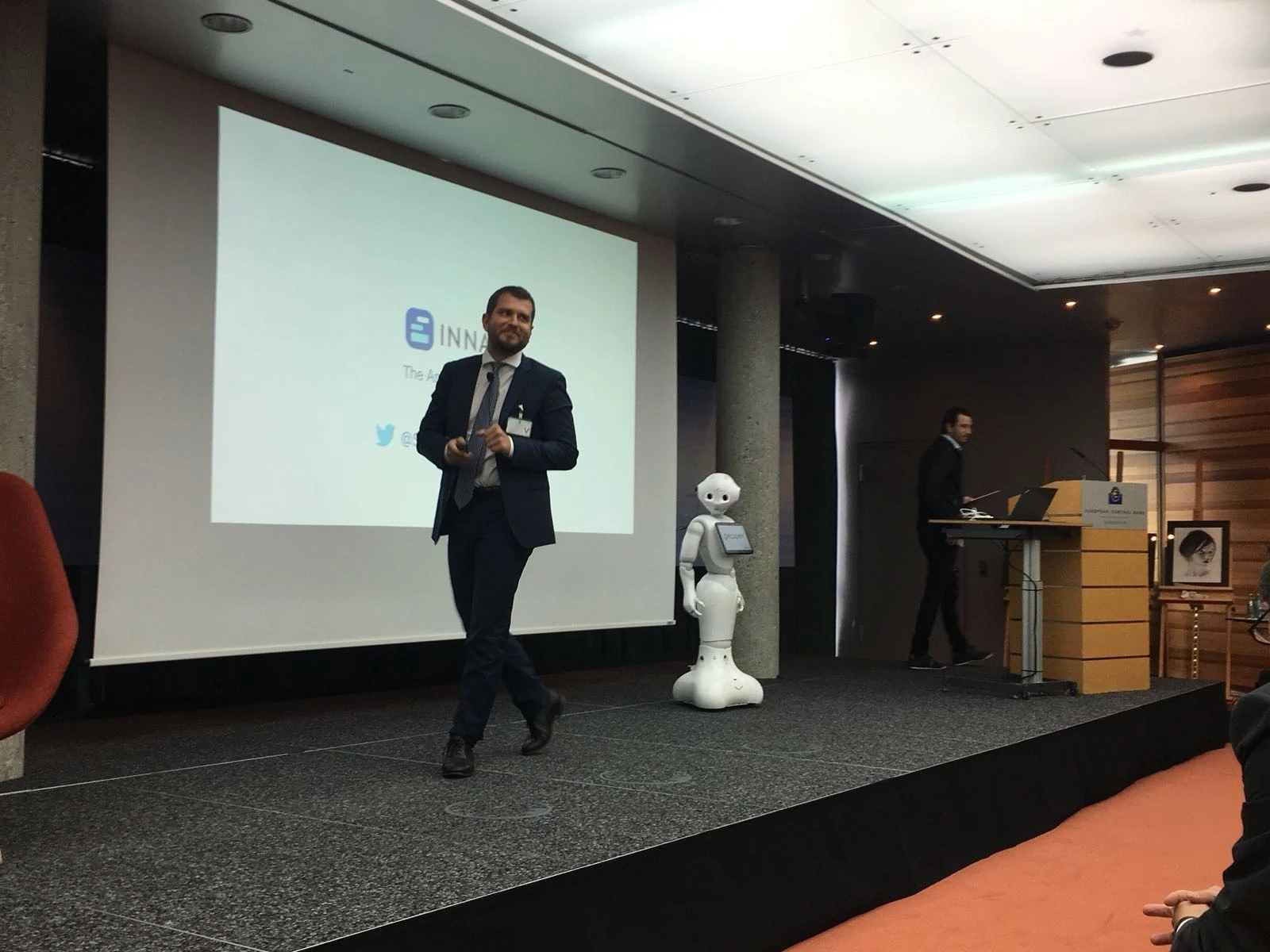
On 26 September 2018, I spoke at the ECB IT Forum, at the Eurotower in Frankfurt. The theme was Artificial Intelligence — beyond the hype… My presentation was about asking questions of data in natural language. I brought a live demo, a set of rehearsed questions, and the considerable emotion of seeing our work on that stage.
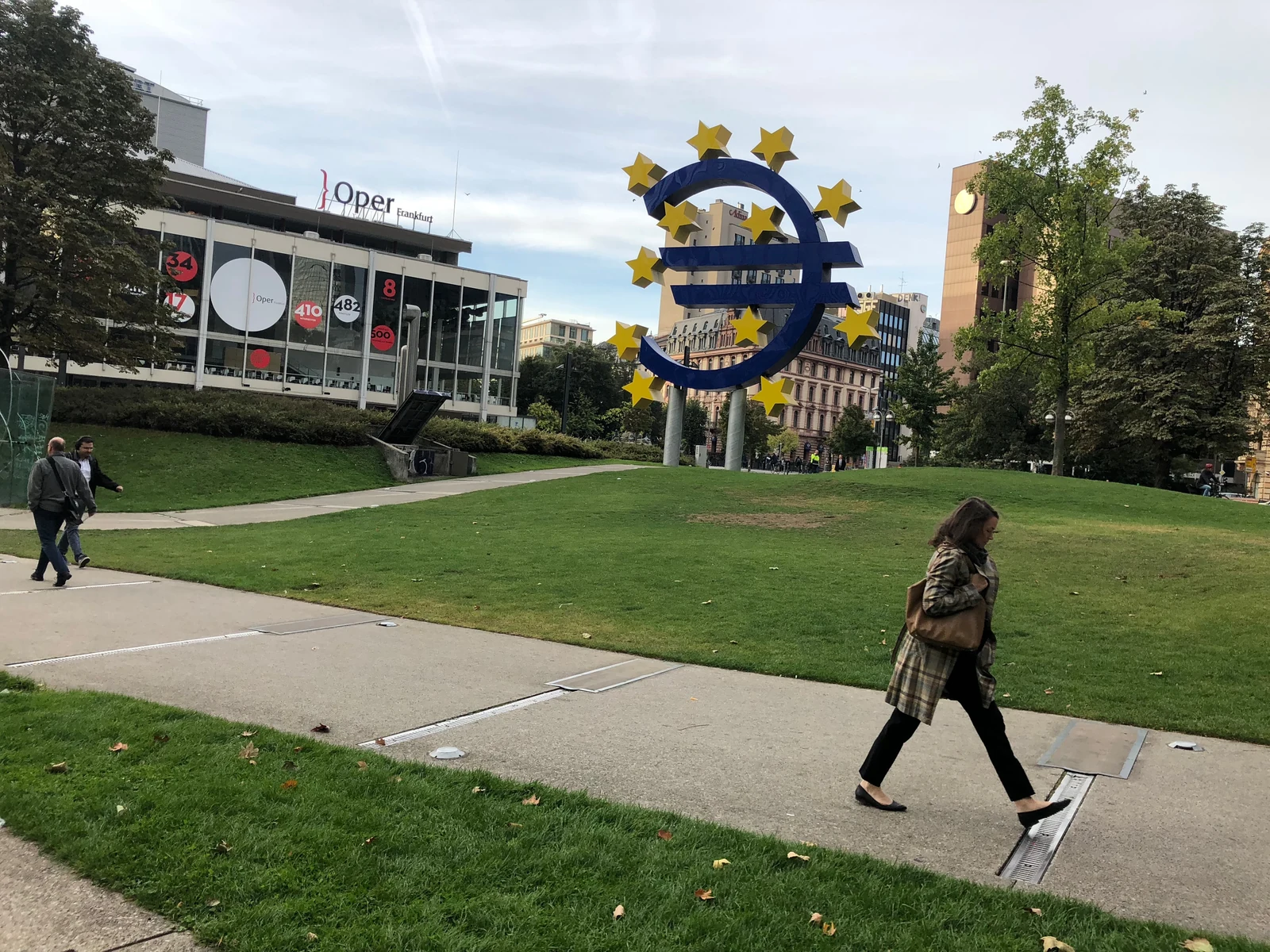
By then, Frankfurt was part of my working life. We had opened a local INNAAS office and joined Accelerator Frankfurt. I was moving frequently between Rome and Frankfurt, on Lufthansa flights, trying to build a company across the distance between the two cities. My memories of that period include the cold, the flights and finding somewhere decent to eat between commitments. You learn a city through those repeated, fairly ordinary needs.
We had developed serious expertise in AI at a time when relatively few businesses had practical experience of it. INNAAS had already spent years turning difficult data problems into products. I felt we had something substantial to contribute in Frankfurt. Being invited to the ECB was an opportunity to put that work in front of people who dealt with consequential information every day.
It was also a big personal moment. Knowing your subject does very little to remove the nerves before a talk you care about.
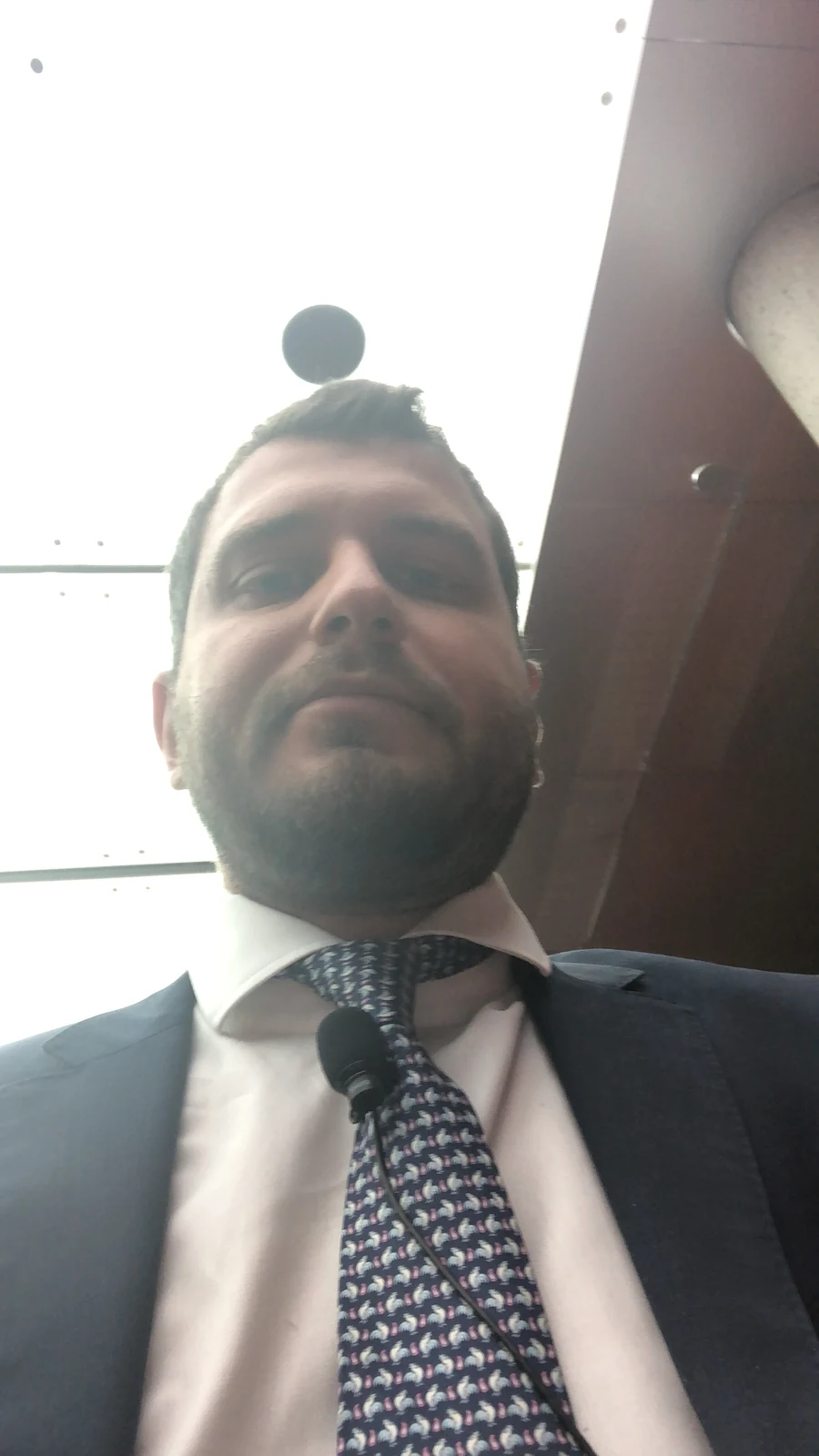
Jacket, tie, microphone. Frankfurt, September 2018.
What about Italy?
In the days before the event, we exchanged emails about the practicalities: an adapter for the iPhone, one for the MacBook, access to the conference room for a rehearsal. I arranged to come the afternoon before. A live demonstration gives you plenty to worry about without discovering the projector connection in front of the audience.
The demo used football data. My rehearsal notes have survived, including their very unpolished wording:
get me goals by team desc
get me goals for germany
What about Italy?
compare goals between reus and ronaldo
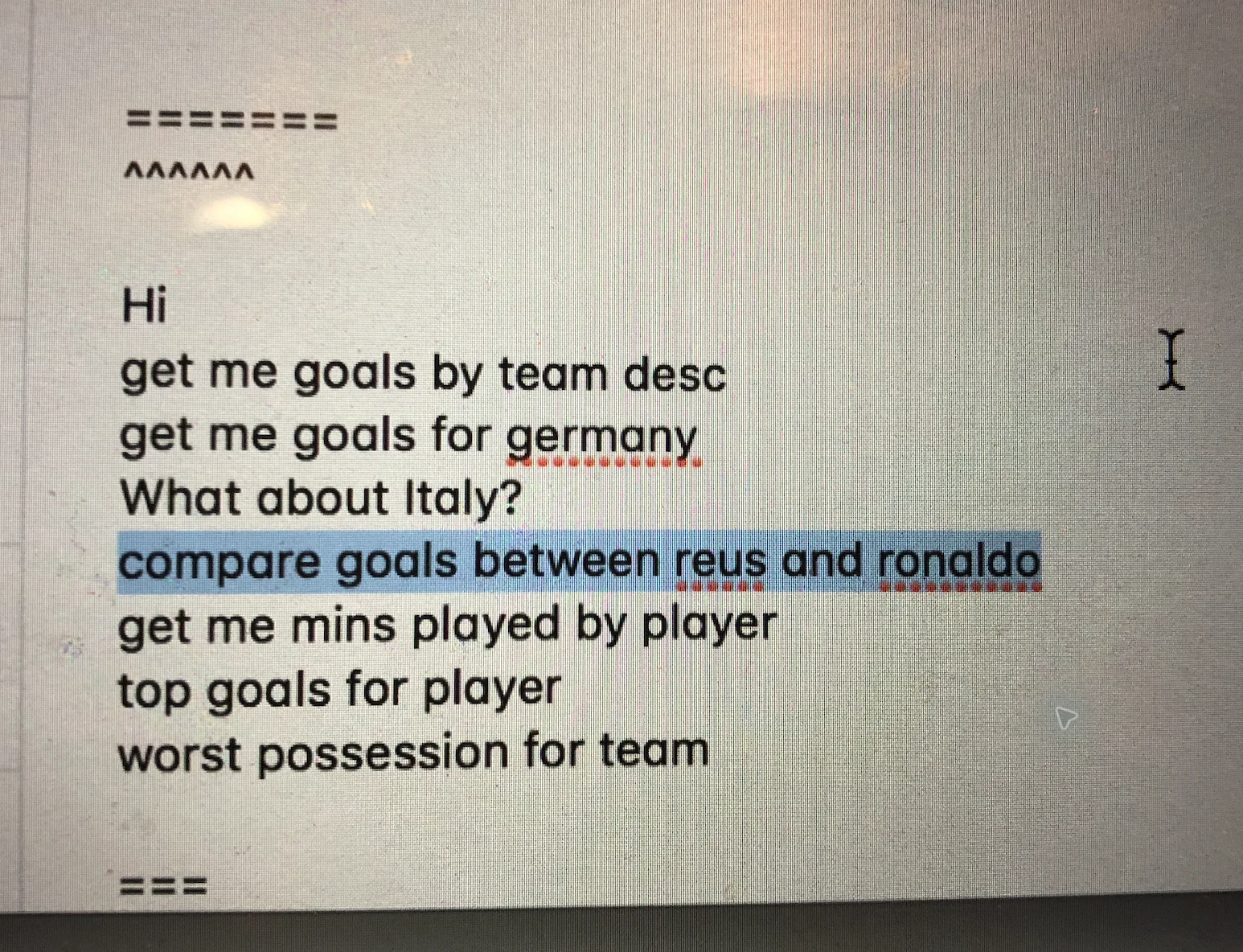
There were also questions about minutes played, the leading goalscorers and team possession. Familiar subject matter made it easier to concentrate on the interaction. You could understand what someone was trying to ask without first learning the vocabulary of an unfamiliar business.
The most interesting line for me is “What about Italy?” It contains almost none of the information a conventional query would require. The person asking expects the previous question to supply the missing context: we were talking about goals for Germany; now change the country. That small conversational move was a good way to explain the ambition behind Askdata.
People carry context from one question into the next. They compare, interrupt themselves and change direction. An interface that lets them do this has to understand more than a collection of keywords. It has to connect the question to the right data, retain the relevant context and return an answer whose meaning is clear.
Our work on football had already taught us how much sits underneath an apparently simple number. A score depends on definitions and decisions about what deserves to be counted. Business data brings the same problem. Two people can ask about revenue and mean different things. A natural-language interface makes those differences visible very quickly.
That was the business opportunity I wanted to communicate: reduce the effort between having a question and being able to investigate it. Every extra step in that process costs attention. Sometimes it costs the question itself, because the person gives up and moves on.
Spending where it matters
The official photograph has me standing beside a robot, with the INNAAS presentation behind me. It captures the part of the day that belongs in a company archive. The hostel belongs in the story too.
I was comfortable with that allocation of money. We needed time with customers, a presence in Frankfurt and a product that could withstand scrutiny. I could sleep in a shared room. The jacket served its purpose at the event; the inexpensive bed served its purpose afterwards.
There is a useful discipline in keeping those decisions separate. An important meeting can easily become an excuse for a whole expensive trip. I wanted our ambition to show up in the work. Spending carefully gave us more opportunities to do it.
I came away proud of what we had built and of being able to explain it there. In my thank-you email to the organisers, I wrote that it had been an honour to present. Looking at the photographs, I recognise both the confidence in our work and the emotion of the occasion. I also remember how much of building a company happens between those photographs: flights, rehearsals, meals, waiting, and getting ready to do it again.
A later reflection, written in September 2026: pizza, a familiar face and the drones over Frankfurt.
Earlier: teaching an algorithm to watch football · Next: getting into Y Combinator