FantaSerieATIM, and the weekends behind the scores

The number I remember is more than 170,000 active users over a weekend, about three months after launch. People were playing from around the world. For our small team at INNAAS, that was an extraordinary thing to see.
I also remember the nights and weekends spent tuning the algorithms underneath it. When people follow football, they have very definite opinions about performance. Once their fantasy team depends on your score, they have another reason to care.
FantaSerieATIM grew out of the work we had started with Italy–Costa Rica and TIM Stadium. During that first demo, we had reduced the performance of two teams to two numbers. Then came the work on football analysis for TIM and Lega Serie A, and eventually an opportunity to put that technology into the hands of the fans themselves.
TIM and Lega Serie A presented FantaSerieATIM in Milan on 10 December 2015. It was the league's official fantasy game. INNAAS contributed to its development, and our work on the performance algorithms was central to what made the experience different.
The scores were calculated from what players did on the pitch and updated during the match. People could make substitutions while the real games were being played. That changed the rhythm: you could watch, reconsider a choice and act on it, with the game still in progress. The launch coverage gives a sense of what we were trying to introduce.
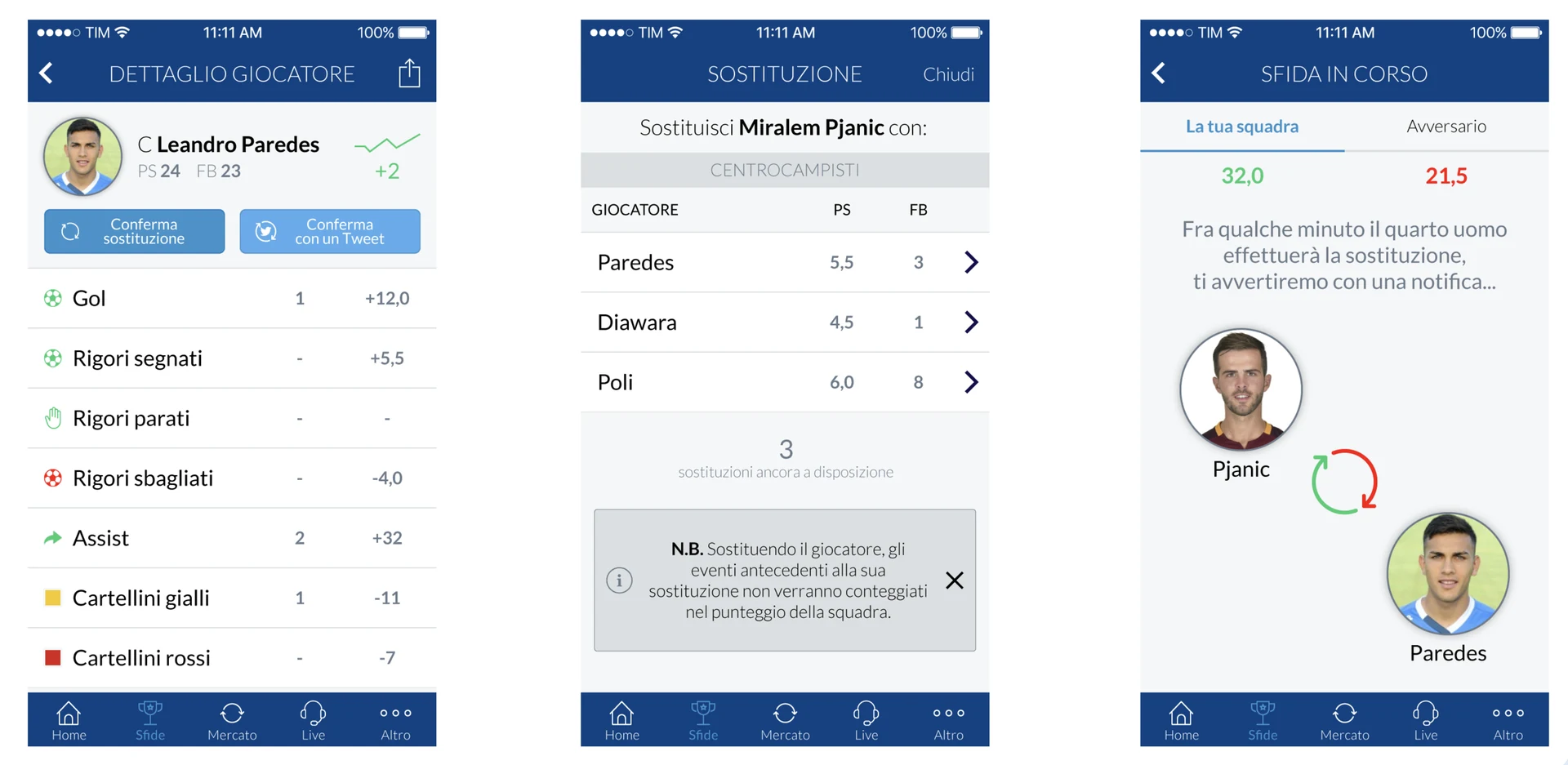
Player scores, substitutions and live challenges. Screens from the product archive.
We met Riccardo Albini, the inventor of Fantacalcio, to convince him to join the project as an adviser. I loved that part of the story. We had spent so much time on measuring performance, and here was someone who had helped create the way millions of Italians played with those performances in the first place.
There is a lot of knowledge in a game that people return to every week. You have to understand what they enjoy choosing, what they want to discuss with their friends, and how long they are prepared to wait for an outcome. I wanted that kind of experience close to the project. Albini's contribution to the design of the game was also recognised in the launch announcement.
Then there was Pierluigi Pardo. I met him when we shot a video for the launch. By that point, a project that had occupied so much of our working life had acquired the voice and face of someone people knew from watching football. I remember the pleasure of seeing it become something we could explain beyond our own team and the people commissioning it.
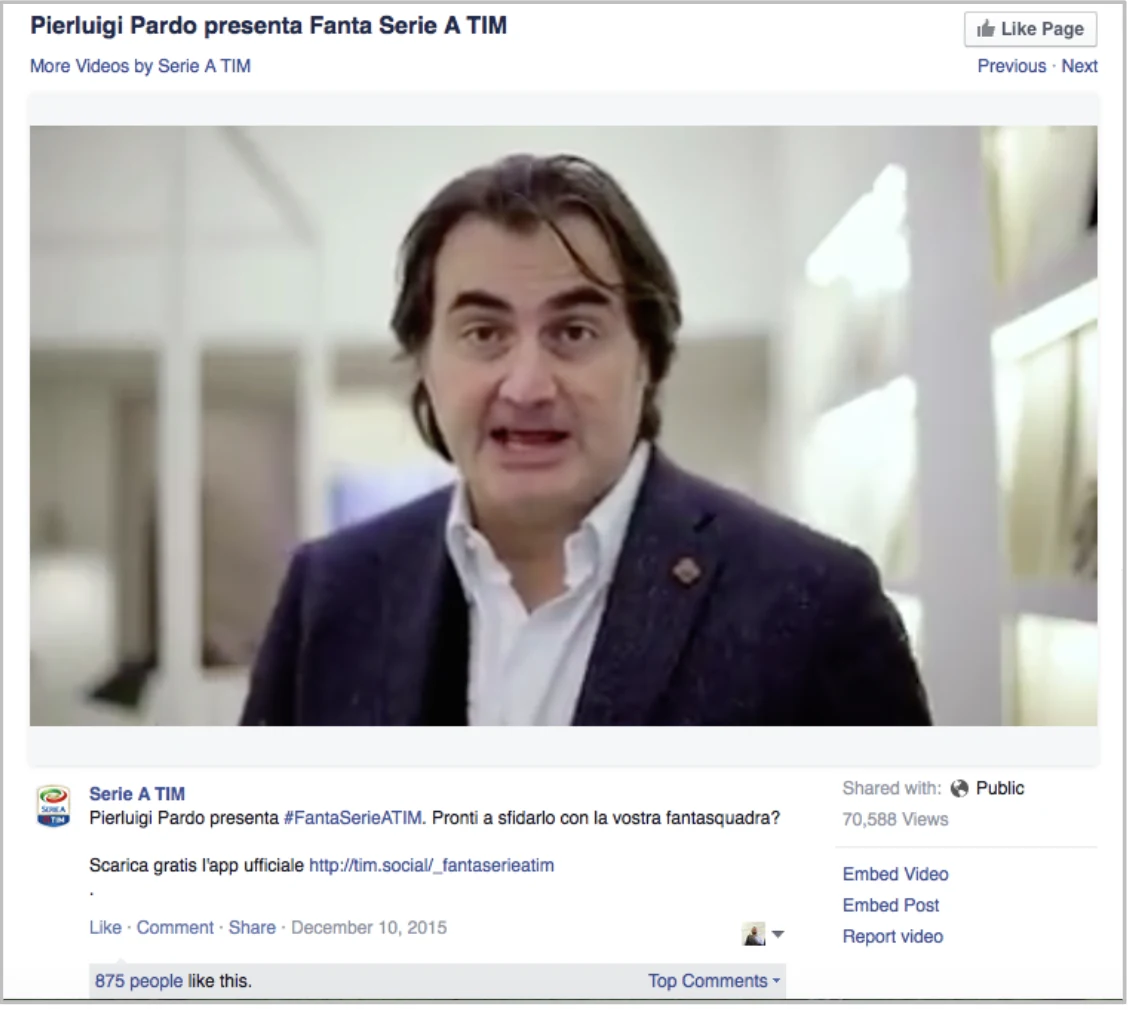
Pardo presenting the game. The Serie A TIM launch video was published on 10 December 2015.
Behind that public side, the work was stubbornly detailed. We spent endless evenings and weekends tuning the algorithms. A score can look plausible in isolation and still behave badly when you compare players with different jobs on the pitch. Even the question of what counts as a good performance forces you to make choices. A forward and a defender contribute in different ways. The model has to take those differences seriously.
I became wary of how easily the word “objective” can end a discussion. Using recorded events gives you something you can examine and apply consistently. The choice of what to measure, and how much importance to give it, still belongs to the people building the model. That responsibility stays with you after you have put a number on the screen.
The tuning mattered because the numbers were part of somebody else's game. A small adjustment could change how a performance was rewarded. We had to care about whether the behaviour made sense across matches, rather than being pleased with one convincing example. That takes time, and a fair amount of willingness to revisit work you thought was finished.
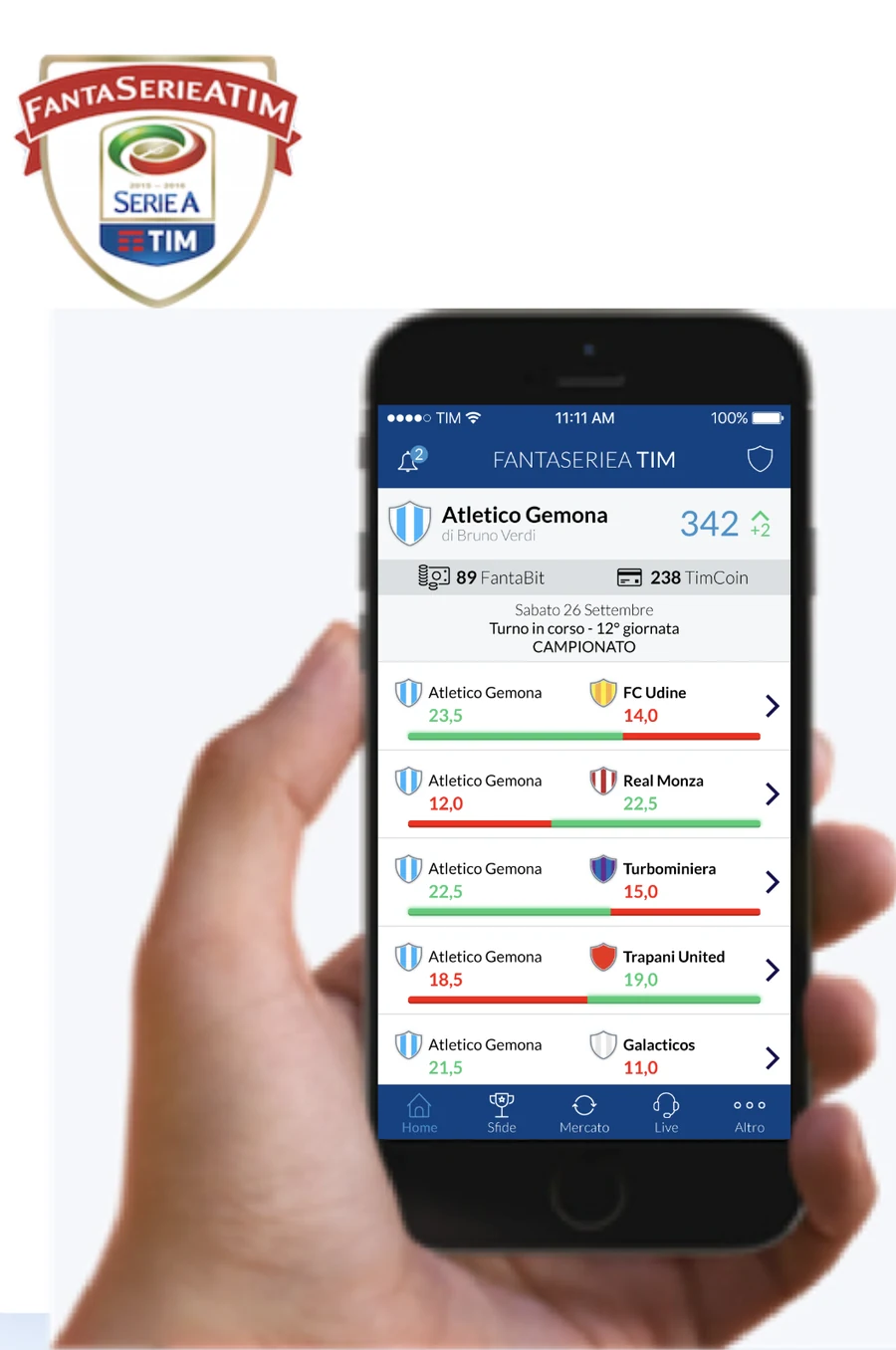
Passing that weekend audience figure made the scale feel real. Our work had become part of how a large group of people spent their time following football. I was proud of the reach, and proud that a small Italian team had helped build the official game alongside TIM and Lega Serie A.
There was a particular satisfaction in being able to open the app and see the result of all those nights. You could show someone what we had made, and they could start playing. For a company whose work often needed a long explanation, I enjoyed that very much.
Earlier: the match that convinced TIM · Later: getting into Y Combinator