Physical AI is a bigger opportunity than humanoids
I think there's more money to be made giving machines new capabilities than there is selling humanoids. Say a factory already owns a robot arm. A customer wants to send it parts in mixed trays. With a camera and software that can work out where to grip each part, the factory could take the order using an arm it paid for years ago. Its spending on robotics just went up. Its robot count stayed at one.
The International Federation of Robotics counted about five million industrial robots operating in factories in 2025. I'd start with the owners of those machines. Take the arm that picks from a tray. With parts held in a jig, it can make the same move every time. Loose parts arrive at different angles, so the software has to choose a grasp from what the camera sees. An operator can deal with the ones the gripper can't separate.
The factory has to decide whether the order pays for the upgrade. Vision software, a different gripper and a few days of lost production all belong in the calculation. So does the next order. If every change of tray brings the integrator back for another week, the factory has bought a custom installation again. If its own technician can show the system the new tray and get the cell running by the next shift, there's a product I'd want to own. IFR's industrial robot figures
Some of the demand is easy to miss if you start with the cost of replacing a worker. Think of a stock check that a warehouse does on Friday because getting somebody up to the top racks takes time. If a drone can do the count overnight, the warehouse can catch a missing pallet on Tuesday, while there's still time to do something about Wednesday's order. Nobody was being paid to do that Tuesday count. It was worth doing all the same.
The drone example is already several years past the prototype stage. In August 2024, IKEA reported that more than 250 drones were operating at 73 locations in nine countries. They flew scheduled routes, identified storage locations and photographed them. A stock team could use that service while the much harder problem of teaching a robot to unpack every kind of box on those shelves remained open. IKEA's inventory drone rollout
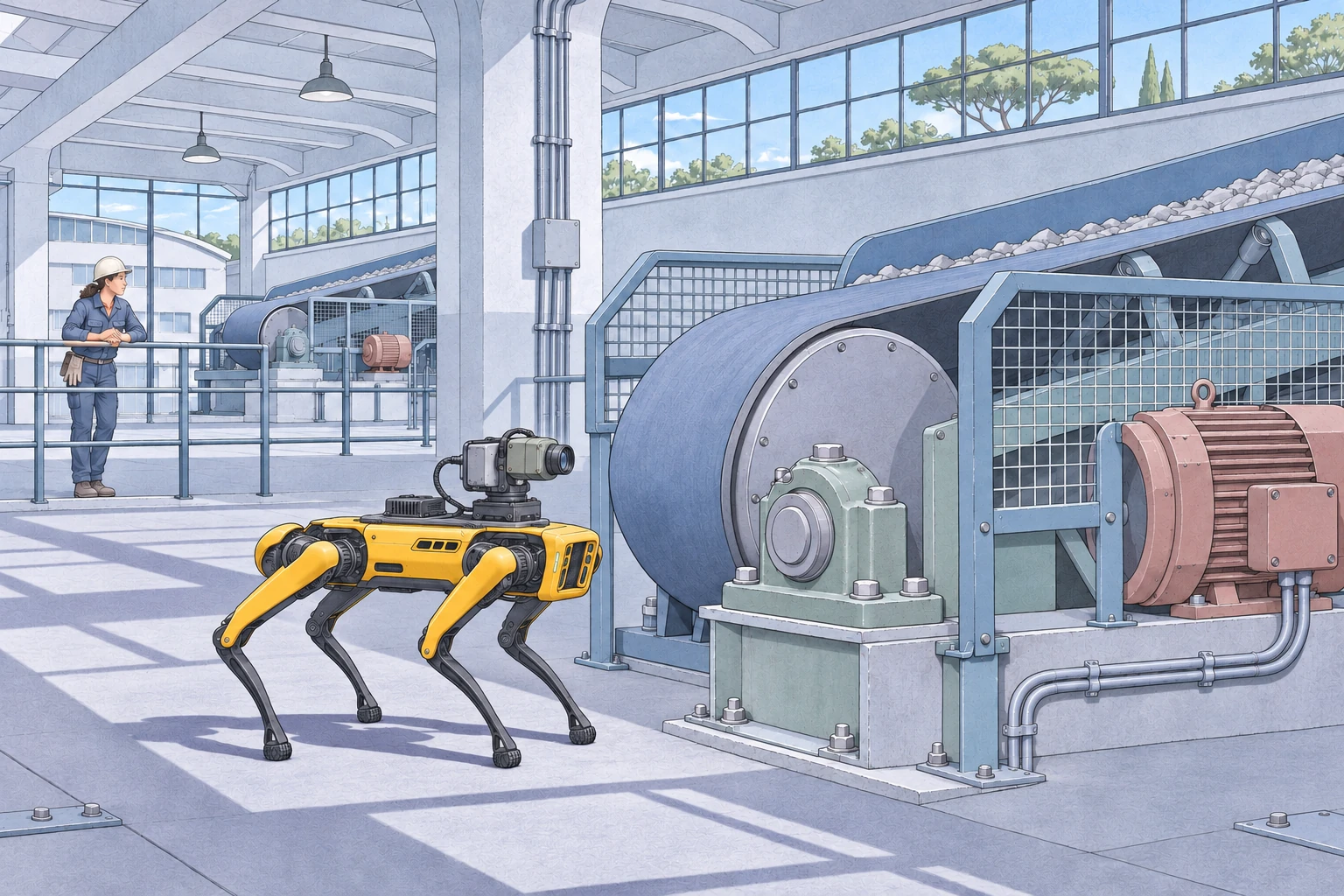
At Holcim, a maintenance plan in SAP can send a quadruped to inspect a conveyor in a dusty area or a drone to examine equipment at height. The result comes back into SAP as a maintenance notification. Cyberwave was one of the partners on that work. The mechanic can open the same record whether the picture came from the quadruped or the drone. At Cyberwave, I want a plant to be able to buy our software once and send work to either machine, even if it bought each one from a different manufacturer. SAP's account of the Holcim inspections
Suppose the next plant can see its conveyor bearing perfectly well from a camera mounted on a column. I'd use the camera. The plant still needs software that knows which bearing is due for inspection, recognises when glare makes a reading useless and gets the evidence to the mechanic responsible. That's work we can sell again. The local crew still has to find the right angle and test it under the lights on the night shift. I'd measure our progress by how much less engineering time the second plant needs to get a result its mechanics trust.
I can also make a case for buying a humanoid. In a workshop doing short runs, a machine that can move between benches and use the tools already on the wall might save the owner from building a separate cell for each job. I'd pay for that flexibility if the work changed often enough. For a nightly inventory count, I'd buy the drone.
My bet is that a company will buy physical AI several times over, from different budgets, before it buys its first humanoid. Production can win an order with an arm it already has. Logistics can afford a count it used to skip. Maintenance can inspect a kiln without sending someone into the heat. If the company eventually buys a humanoid, I'd like that machine to pick up its first work order from the same system.