Real or AI generated? That's the question
One of the clues that supposedly gave away a fake Taylor Swift song last week was Charlie Puth. A clip from the title track of The Tortured Poets Department was going around before the album came out. Some fans heard Swift mention him and decided a machine must have written it. On Friday the record arrived. Charlie Puth was still there. WIRED on the leak
I have some sympathy for those fans. I associate Coldplay’s Parachutes so closely with Naples that a few seconds of a guitar can take me back there. If a friend sent me an unreleased track that sounded exactly like Coldplay from that period, I’d want to believe it. I could probably give you three quite detailed reasons why it sounded right. All three would tell you something about the records I love. None would tell you who was in the studio.
Take “Heart on My Sleeve,” the song that sounded like a collaboration between Drake and The Weeknd. Ghostwriter, who made it, told Billboard that he wrote it, produced it and recorded the vocal himself. He then used voice filters to make it sound as though the two stars had sung it. Call the whole thing machine-made and the songwriter disappears. File it under Drake and you give the performance to someone who never went near the microphone. Ghostwriter’s interview
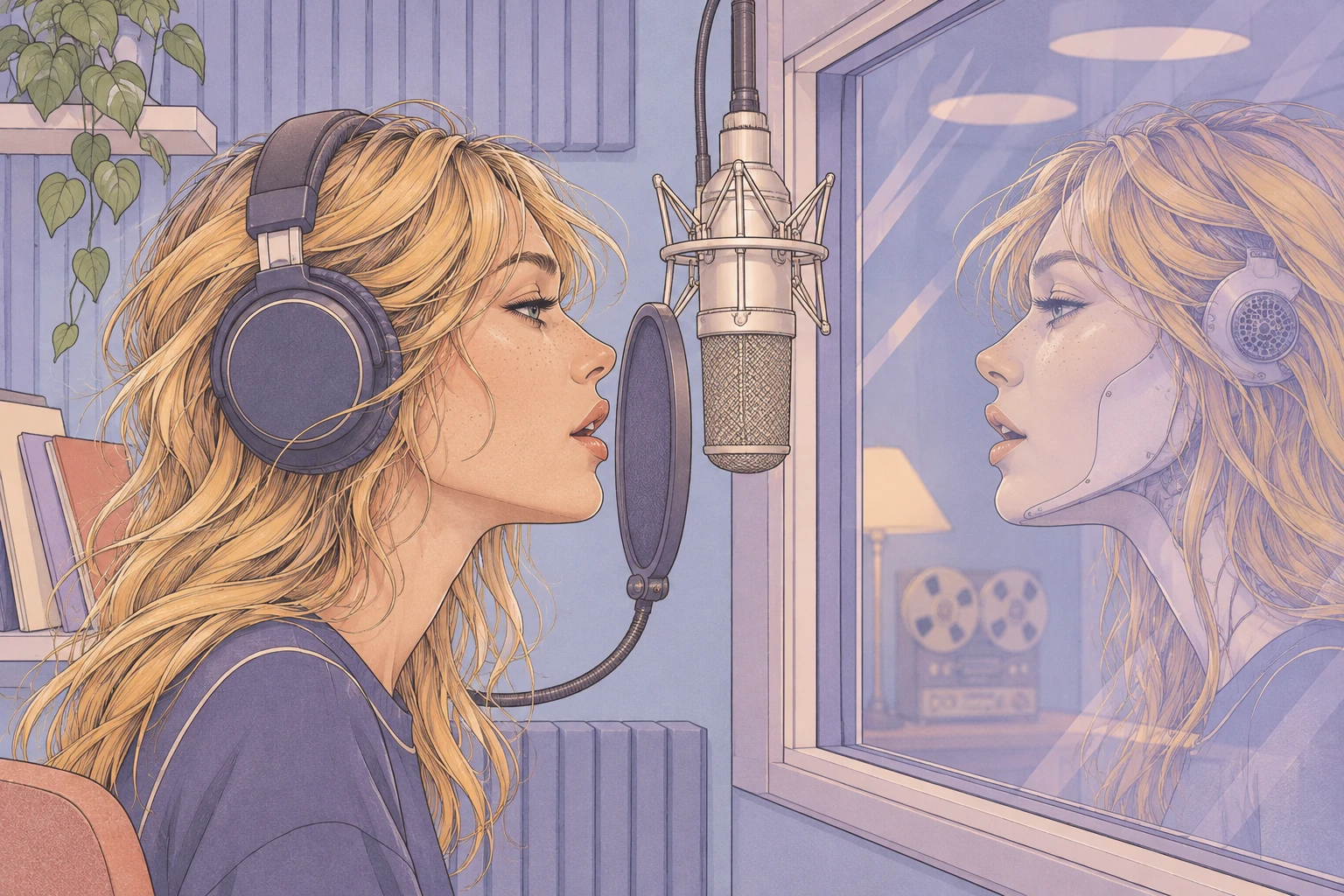
Holly Herndon did something I like with that same idea. She stood onstage beside a musician called Pher and gave him two microphones. Through one, the audience heard his own voice. Through the other, they heard him sing through Holly+, an instrument she helped make from hers. You could watch him draw breath. You could see her there beside him. I’d happily buy a ticket for that performance, and I’d want both names on it. Watch Herndon and Pher perform
Then there’s the piano on the Beatles’ “Now and Then.” John Lennon recorded the song at home, singing and playing onto the same tape. In the nineties the surviving Beatles tried to finish it. Every time they brought up his voice, the piano came up with it. Decades later, Peter Jackson’s sound team managed to separate the two. What moves me about that record is knowing that Lennon once sat down at a piano and sang those words. Knowing exactly what the software did makes the record more interesting to me. The Beatles on the original tape
Last month Tennessee’s governor signed the ELVIS Act to give people more control over the use of their voices. That matters to a singer whose voice turns up on a stranger’s record. As a listener, I’d like a much smaller change too. When somebody forwards me a clip of Pher singing through Holly+, I’d like the credit to travel with it. Cut the video down to ten seconds of audio and I could easily give her credit for a note that Pher sang. Tennessee’s announcement
If I were building a music service, I’d start with the share button. Send ten seconds of “Now and Then” to a friend and the little player should say that the vocal comes from Lennon’s home demo. Share the Herndon performance and it should read “Pher singing through Holly+,” with a link back to the stage. If an upload has no source, I’d leave the artist credit open until someone can supply one. A friend can recommend a brilliant song. Putting a singer’s name on it is a different promise.