The SAP exit: a startup is a team sport
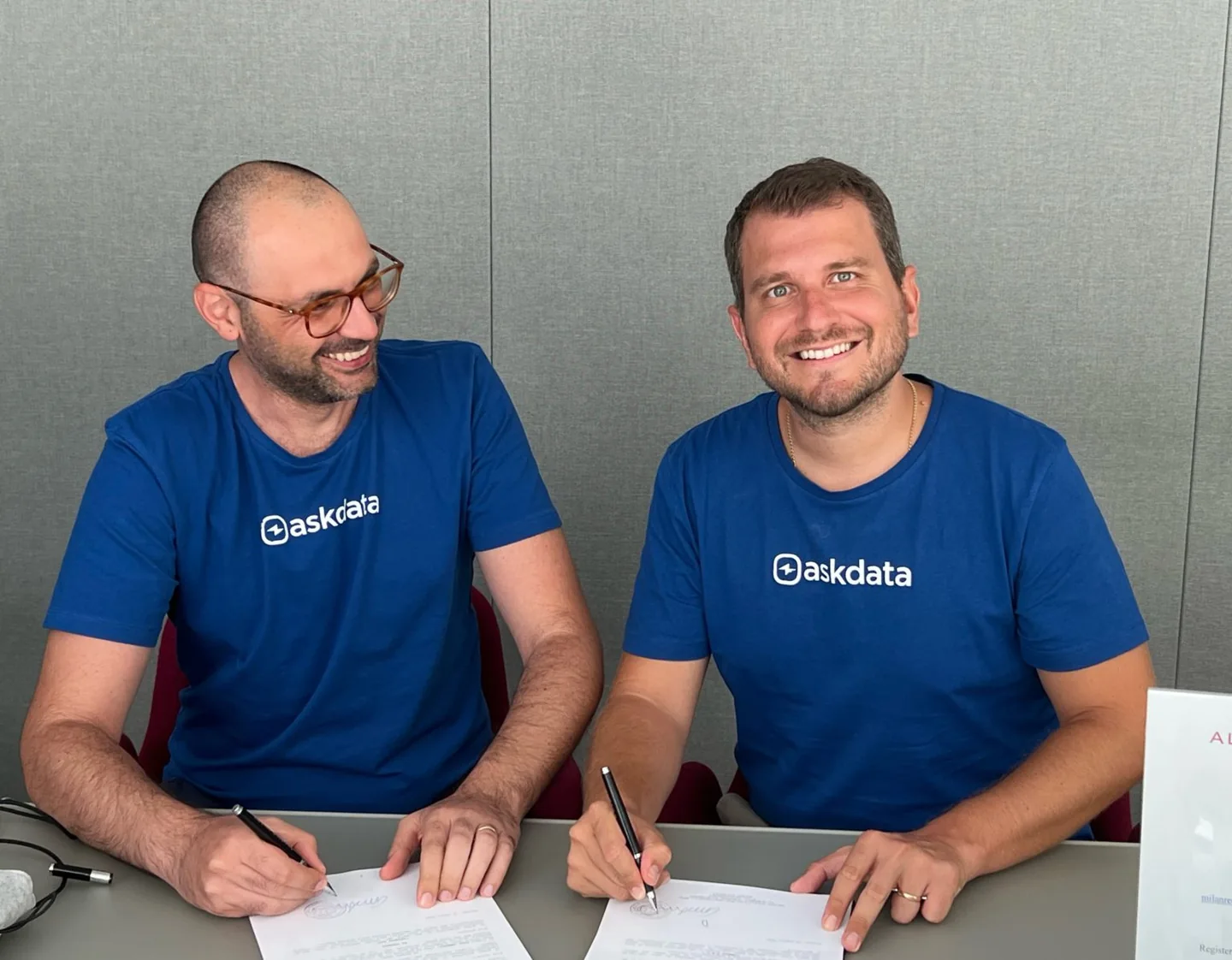
There are two of us signing in this photograph. It took a whole team to get there.
On 21 July 2022, SAP announced the acquisition of Askdata. Selling the company we had built to a technology company was a dream coming true. I was happy about it. Years of work had led to a business that SAP wanted to bring inside its own.
We celebrated with the team in the swimming pool at Pi Campus, with Marco Trombetti. Then we went to the sea and all went swimming. When I think about the exit, that is the scene I return to: everyone together, finally taking some time to enjoy what had happened.
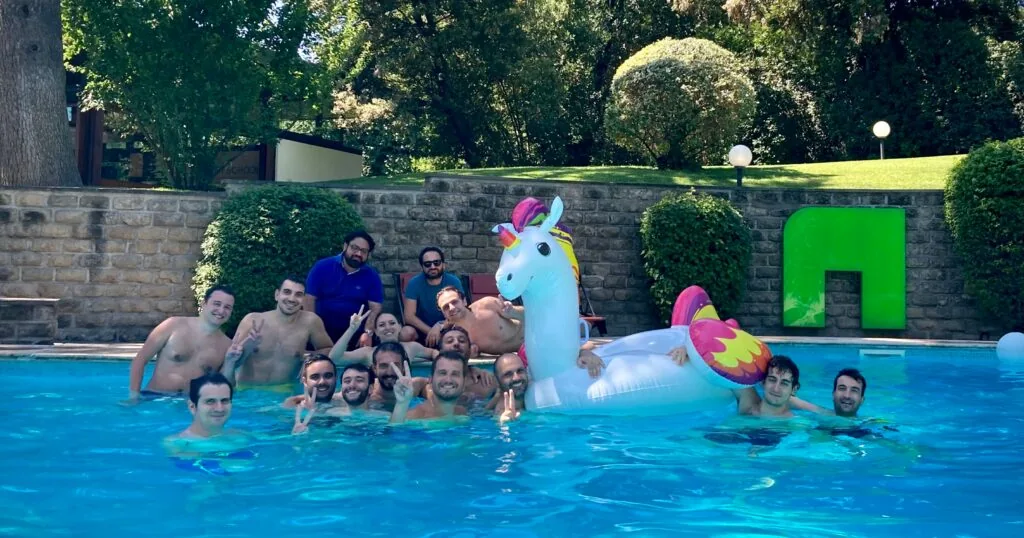
The team at Pi Campus. Photo from Pi Campus’s acquisition announcement.
A startup is a team sport. Football is the comparison that makes sense to me. The founders appear in the signing photograph and answer the interview questions, but the result belongs to the people who have played together. I felt that strongly when we were celebrating. I wanted the team to have the day.
Askdata came from a frustration Giuseppe and I knew well: people responsible for business decisions often had difficulty getting answers from their own data. We wanted them to ask a question in ordinary language and get something useful back. That sounds straightforward. Turning it into a product that works inside real companies gave us plenty to do.
The ambition was there early. So were the difficulties in explaining it. At our YC interview in November 2018, we had struggled to convey how a horizontal platform could serve so many uses. By March 2019 we were at Demo Day, raising money and trying to make the next stage possible. Those moments felt enormous while we were living them. Each one still left a company to run the following morning.
Now we had reached a very different moment. The acquisition meant the technology could become part of a software business serving companies at a scale we could not reach on our own. I liked the prospect of seeing our work used more widely. The original problem still interested me; the environment in which we could work on it was changing.
When I spoke to StartupItalia that July, I talked about the importance of being physically present in Silicon Valley. Between 2019 and March 2020, I had been alternating two weeks in Rome with two in San Francisco. That was how we met SAP. Repeated trips gave relationships time to develop beyond a first introduction.
Pi Campus mattered at the other end of those journeys. Rome was where we had people, work and a technology community around us. I was proud that a company built there could attract a buyer like SAP, and that the team could stay in Rome while our work reached a much larger audience.
I had wanted to sell to a technology company. There was satisfaction in knowing the buyer cared about something we had spent years building. I could recognise our work in the reasons for the acquisition. That made the outcome feel personal in a way that the word “exit” does not quite capture.
It would be easy to arrange all the earlier events into a tidy path towards that signature: the first projects, YC, the fundraise, the trips to California. Inside those years, we had been making decisions with much less certainty. We were trying to get the product right, win customers and keep the company moving. There was no photograph of the ending available to consult.
On the day we celebrated, I did not need a grand theory of any of it. I was with the people who had done the work. We had achieved something we had wanted for a long time.
We went swimming.
The beginning of the YC journey · Demo Day and the fundraising