A winter at Y Combinator
For a few months, home was a Zeus apartment on Taylor Street, near Union Square. I still have a picture of coffee going into the black Zeus mug. It is an ordinary photograph, but it brings back that whole period: San Francisco, Askdata, Y Combinator, and the feeling of being very far from my normal life while doing exactly what I wanted to do.
We had been accepted in November. By the winter programme, the question of whether we belonged there had become rather impractical. We were there. We had a company to build.
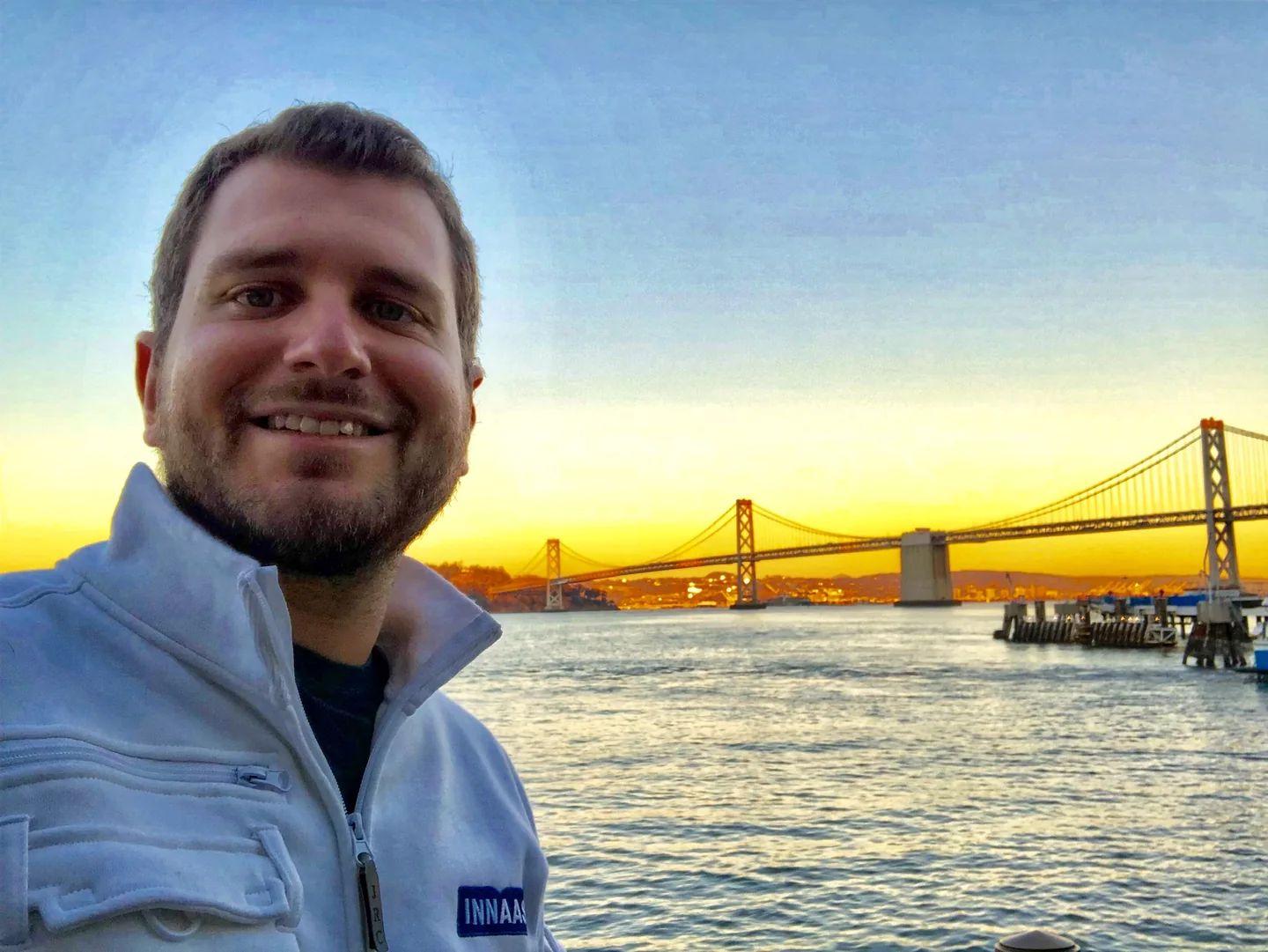
I loved San Francisco. I loved being in a city where so much of what interested me was happening, and where people would take a small company’s ambition seriously enough to argue with it. I was also tired for a substantial part of my stay. Looking at the photographs, both things are visible.
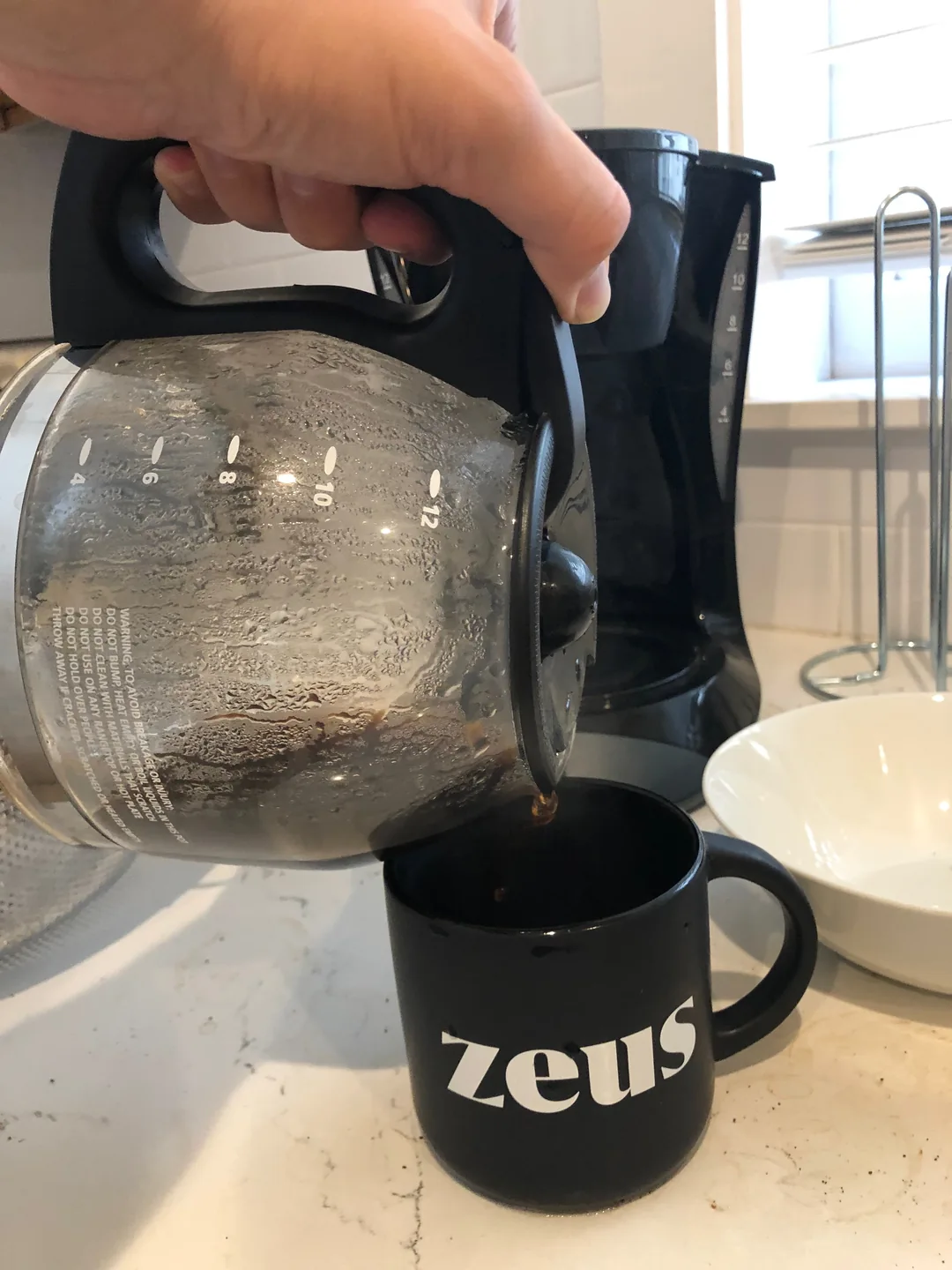
Taylor Street, near Union Square. Coffee at home during the programme.
The most important part of the batch was the other founders. Friends from different countries, different backgrounds and very different businesses, all trying to make something work at the same time. You could spend a long time explaining the particular complications of your company, then discover that someone with a completely different product understood exactly how you felt.
There was plenty of peer pressure. Put ambitious people together and give them a short period in which to make progress, and comparison takes care of itself. Someone else was moving quickly. Someone had figured out a problem you were still stuck on. You were pleased for them, and you also went home thinking about your own week.
That could be uncomfortable. It also made excuses harder to maintain. Back home, it was easier to explain a delay through the particular difficulties of our market or our technology. At YC, everyone had particular difficulties. Being around them made me more impatient with the explanations I had become too comfortable repeating.
The friendships made that intensity bearable. I remember the mixture of nationalities and accents, and how quickly a conversation could move from a product problem to something completely ordinary. We were young companies, but we were also people spending a few strange months away from home. I enjoyed that part enormously.
And then there was pizza night. Hawaiian pizza. Pineapple, on a pizza, in the office of one of the most influential startup programmes in the world. As an Italian, I felt that some due diligence had clearly been skipped.
I could accept that I had things to learn about company building. I was less open-minded about this particular innovation.
People who had already built the things we used
Michael Seibel was running the accelerator then. He had co-founded Justin.tv, which became Twitch. Around us were people who had built products and companies that had already entered everyday life. Meeting them made the scale of their work feel more concrete. They could talk about an early decision and follow it through years of consequences.
On 10 January 2019, the Cruise founders, Kyle Vogt and Daniel Kan, came to speak. What stayed with me was the candour about the acquisition by General Motors. A founder talking frankly about a transaction has a different texture from a company announcement. I listened as someone still trying to build his own company, fascinated by the distance between where we were and a decision of that size.
Paul Graham and Jessica Livingston struck me as thoughtful and wise. I remember them talking about venture investing, multiples and the future value of a company. Some of the valuations around YC initially sounded almost absurd to me. I remember figures around twelve million dollars post-money in fundraising conversations. Those were valuations being discussed for young companies raising money, separate from YC’s own investment terms.
The reasoning became easier to follow once I thought about what an investor was buying. Most of the value being discussed still had to be created. A conventional comparison with the company’s present size could miss the very outcome the investor was interested in.
Paul’s essay Black Swan Farming gives that idea its sharpest form: a few exceptional outcomes can dominate the returns. The difficult part is recognising their possibility while the companies are still small and often look rather unlikely. It helped me understand the apparent mismatch between the room we were sitting in, the state of our products, and the numbers being discussed.
I did not come away thinking every high valuation was sensible. I became more interested in the assumptions behind it. What would have to become true? How large could the company become if we were right? That was a useful way to interrogate our own ambition, too.
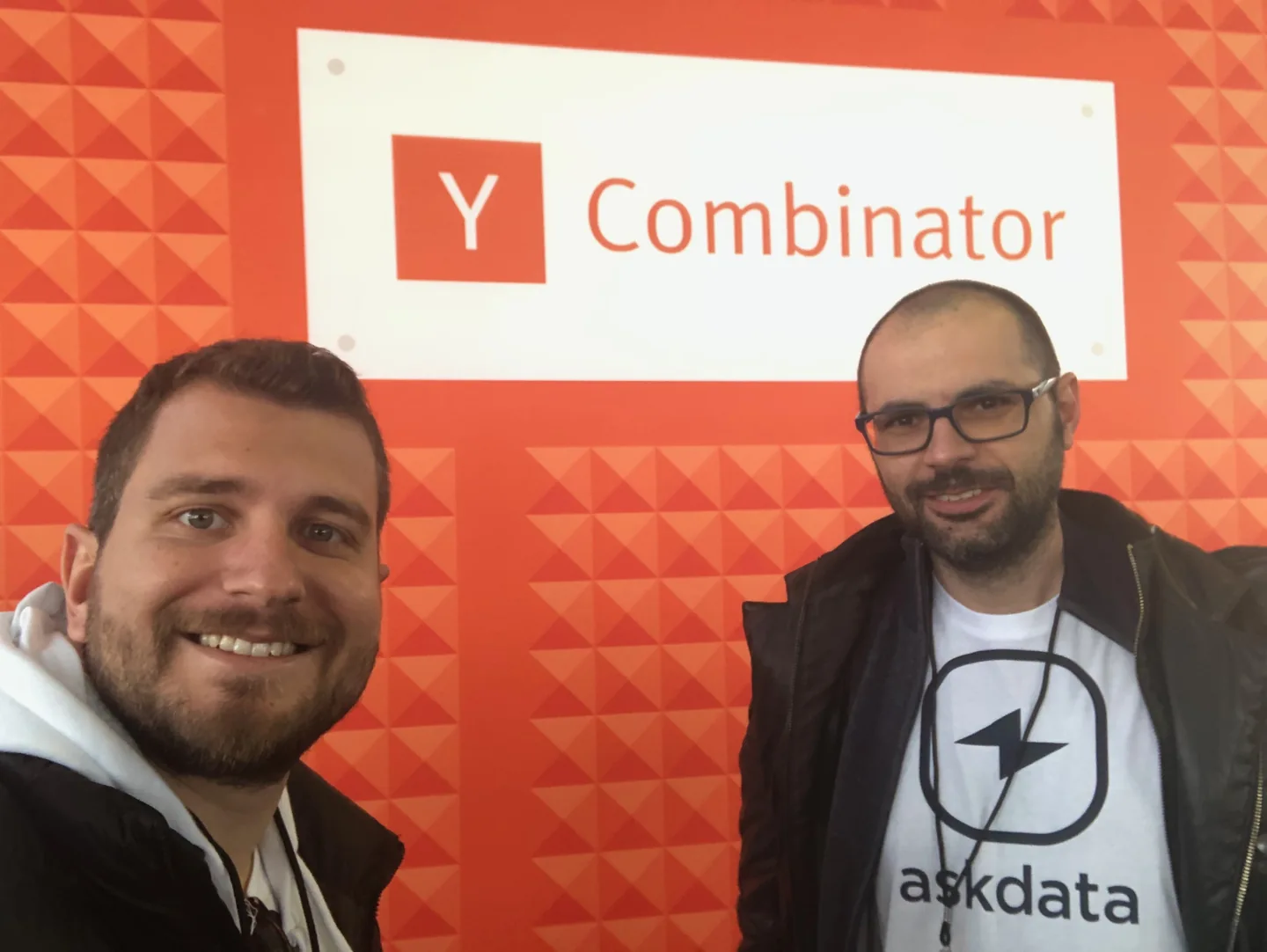
Giuseppe and me at YC, 17 March 2019.
On 13 March, I joined Paul Buchheit’s group office hours at the old Pioneer Way building. Meeting the creator of Gmail was already a fairly remarkable way to spend an afternoon. The part I kept thinking about afterwards was his point about a founder’s insight.
An investor should come away feeling that you know something about the problem that they do not. You have spent the time with it. You have noticed something. There is a reason you believe this company should exist, and that reason has to survive questions.
I remember it as the “secret insight” discussion. The word secret can make it sound more theatrical than it is. Often the insight comes from staying close to an unglamorous problem for longer than other people are willing to. You know where the work gets stuck, which workaround people actually use, and why the apparently obvious solution keeps failing.
For Askdata, that was useful. We could talk for a long time about natural language and the possible applications of our technology. We also knew the frustration of people who had a business question and could not get to their own data. We needed to communicate that knowledge more clearly. A long list of potential use cases could obscure how well we understood the underlying problem.
Paul Graham makes a related argument in How to Convince Investors: deep knowledge of the market gives a founder a much firmer basis for confidence than practising a persuasive performance. I liked the demand that places on us. If the investor asks a better question than the pitch answers, we should have something more substantial to say.
Buchheit also talked about Gmail’s beginnings. What stuck with me was how basic the early version was, and how much of the product had emerged through use and iteration. I mean the early internal product here, before the public launch people remember. Even something as familiar as Gmail had once been an incomplete piece of software that somebody was trying to make useful.
I also remember his explanation of the invitations: capacity was limited, so access had to grow at a pace the infrastructure could support. A practical constraint helped produce something that, from outside, looked like a carefully designed sense of exclusivity.
Those details interested me far more than a polished origin story. An unfinished product, real users, constrained resources, another version. I could recognise the work. The eventual scale was extraordinary; the early problems were intelligible.
Taylor Street
Away from the meetings, there was the apartment and the city. The Zeus mug belongs in this story as much as the orange YC sign. So do the friendships, the accents, and the pineapple I remain unable to defend.
The programme changed what I considered a plausible ambition for Askdata. It also gave me people with whom I could talk about the less impressive parts of trying to reach it. That combination mattered. I wanted to build something much larger, and I had a more honest sense of the work involved.
There was a lot of pressure in those months. There was a lot of pleasure, too. I am glad I took photographs of the ordinary bits. Otherwise I might have kept only the meetings and the pitch in my head, and forgotten what it felt like to live there.
Previously: getting into YC · Next: Demo Day and the fundraising